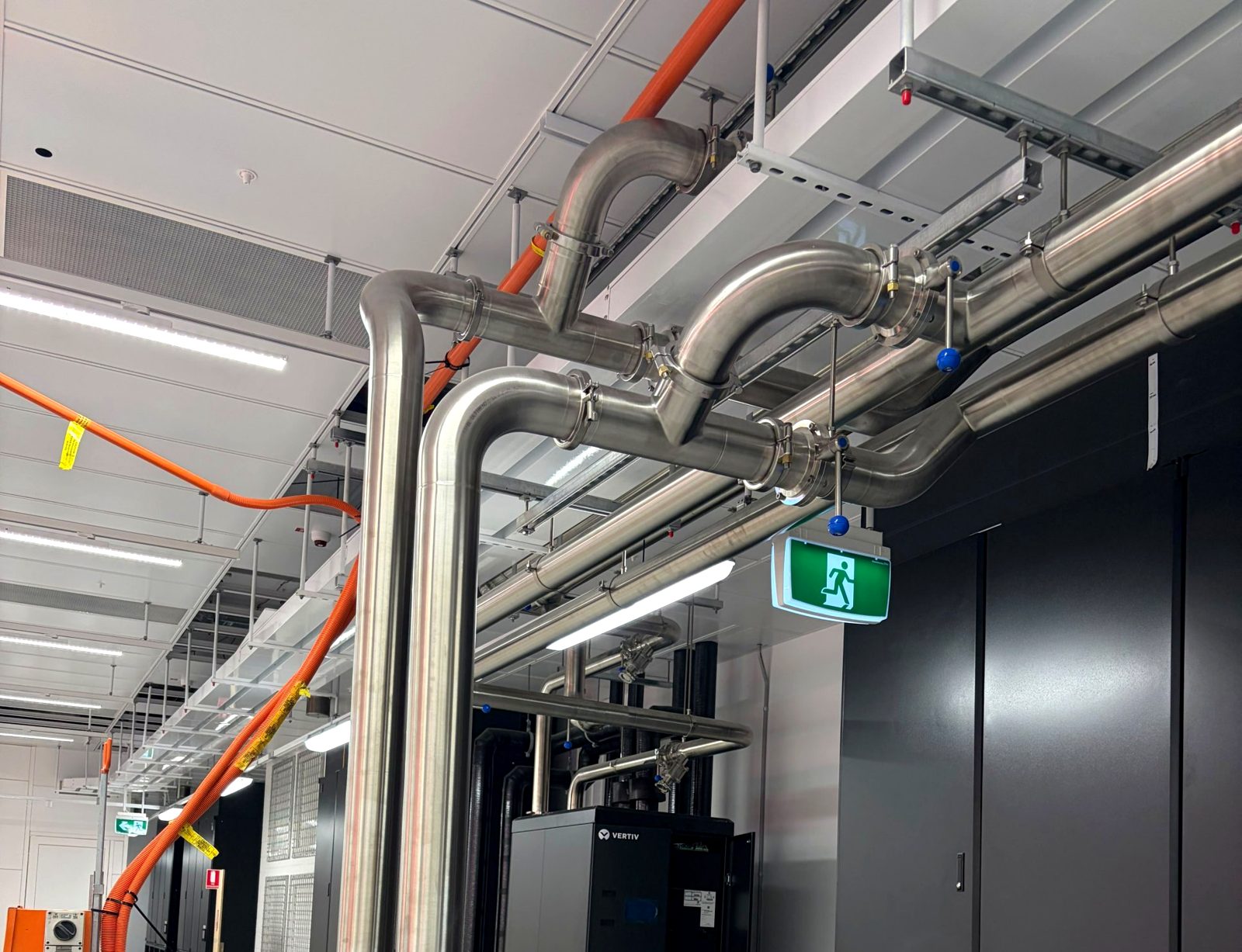
In a liquid-cooled hall the technology cooling loop is filled once and sealed. Whatever is inside the pipework when it is filled stays there: weld slag, cutting swarf, jointing compound and construction dust. It collects at strainers, in the fine channels of cold plates and in CDU heat exchangers, where it costs performance and, eventually, hardware.
The flush happens late. The loop has to be installed and pressure tested first, and the fill and CDU commissioning cannot start until it is accepted. Any delay at that point lands directly on the date the hall is meant to take IT load.
What to settle before the flush
- Acceptance criteria agreed in the specification, not on the day
- Cleanliness measured by instrument, not judged by the colour of the water
- Flush and fill under one scope, so the loop is not left open between contractors
- A certificate that records the condition of the loop when it was sealed
None of this is complicated. It is a matter of deciding it early, and putting it in front of the contractor who will be accountable at handover.